
Safety Guides
Discover the latest in product safety, recall procedures, and tips to protect your household.
Discover the latest in product safety, recall procedures, and tips to protect your household.


Strollers, toddler towers, baby walkers and travel systems are products parents trust every day. They help move a child, feed a child, involve them in the kitchen, or keep them close while the family is outside. But recent official alerts show a clear pattern: many of these products are recalled not because they look obviously broken, but because a specific model, accessory, opening, strap, bar, wheel or folding mechanism can create a fall, tip-over, entrapment, choking or injury risk.
This is exactly the kind of product category parents should track. A stroller may look normal. A toddler tower may feel stable most of the time. A baby walker may still be sold online. A car-seat adapter may appear locked but still be part of a recall.
This guide explains what parents should check first, which product details matter, and how to avoid missing future baby mobility and childcare product alerts.
This is not only an evergreen safety topic. It is current.
In July 2026, Health Canada listed the Boon PIVOT Toddler Tower Kids Kitchen Step Stool as a priority recall due to a tip-over hazard, telling consumers to stop using the recalled products and contact TOMY International for a repair kit. The affected models include grey and white Boon PIVOT toddler towers with specific SKUs and UPCs.
Also in July 2026, Health Canada recalled a Vevor 4 in 1 Baby Walker because baby walkers have been banned in Canada since 2004 and can expose children to hazards they normally could not reach, including falls down stairs.
In June 2026, the US CPSC warned consumers to stop using B. Childhood strollers because of an entrapment hazard involving an opening between the seat and grab bar.
And in June 2026, Joolz recalled Aer2 Car Seat Adapters for Joolz Aer2 strollers because the adapters can fail to attach properly, allowing the car seat to fall from the stroller. CPSC says about 3,840 units were sold in the US, with about 148 more sold in Canada.
The lesson is simple: parents should not only check toys and food. They should also track the products that hold, move, lift or support their child.
Start with the products that physically support or restrain a child:
The highest-risk situation is usually not a brand-new item bought yesterday from a major retailer. It is often a product bought online, received as a gift, purchased second-hand, stored in a garage, or used across multiple children.
For baby mobility and support products, the exact identifiers matter.
Check:
For example, the Joolz recall affects the Aer2 Car Seat Adapter Set, not the full stroller. The product identifier starts with NL311, and the adapters were sold between June 2025 and May 2026.
The Boon PIVOT toddler tower recall lists specific model/SKU groups and UPCs for grey and white versions, which means parents need to check product labels carefully.
Toddler towers and kitchen step stools can tip if they do not meet stability requirements or if the design becomes unstable during normal use. Because children use these products at countertop height, a fall can be serious.
Some stroller designs can create gaps where a child’s head, neck, or body may become trapped. CPSC’s B. Childhood stroller warning is an example of a stroller-related entrapment concern.
Stroller adapters, travel systems and car-seat attachments are especially important. A parent may think the car seat has clicked into place, but the recall may involve a “false lock” or attachment issue. Joolz says affected Aer2 adapters may appear secure but still be incorrectly locked.
Some strollers and baby gear include foam, labels, small detachable parts, bar covers or accessories. Health Canada’s INFANS stroller recall involved foam material on the grab bar that could release small parts and pose a choking hazard.
Some stroller accessories can introduce cords, loops or straps into the child’s space. Health Canada’s Joovy Tricycoo stroller recall involved a storage bag with a cord loop extending into the occupant space, creating a strangulation hazard.
Look under the seat, on the frame, near the wheel area, on the underside of a tray, on the fold mechanism, on the product base, or inside the instruction label.
Take clear photos of:
Compare your product to the official recall page, not only a news headline.
Some recalls do not affect the whole stroller. They may affect only:
If the product matches an official recall or warning, stop using it and follow the official instructions.
If your stroller, toddler tower, baby walker or travel accessory matches a recall:
Do not keep using a recalled stroller or tower because it “seems fine.” The issue may happen only in certain positions, folds, installations or impacts.
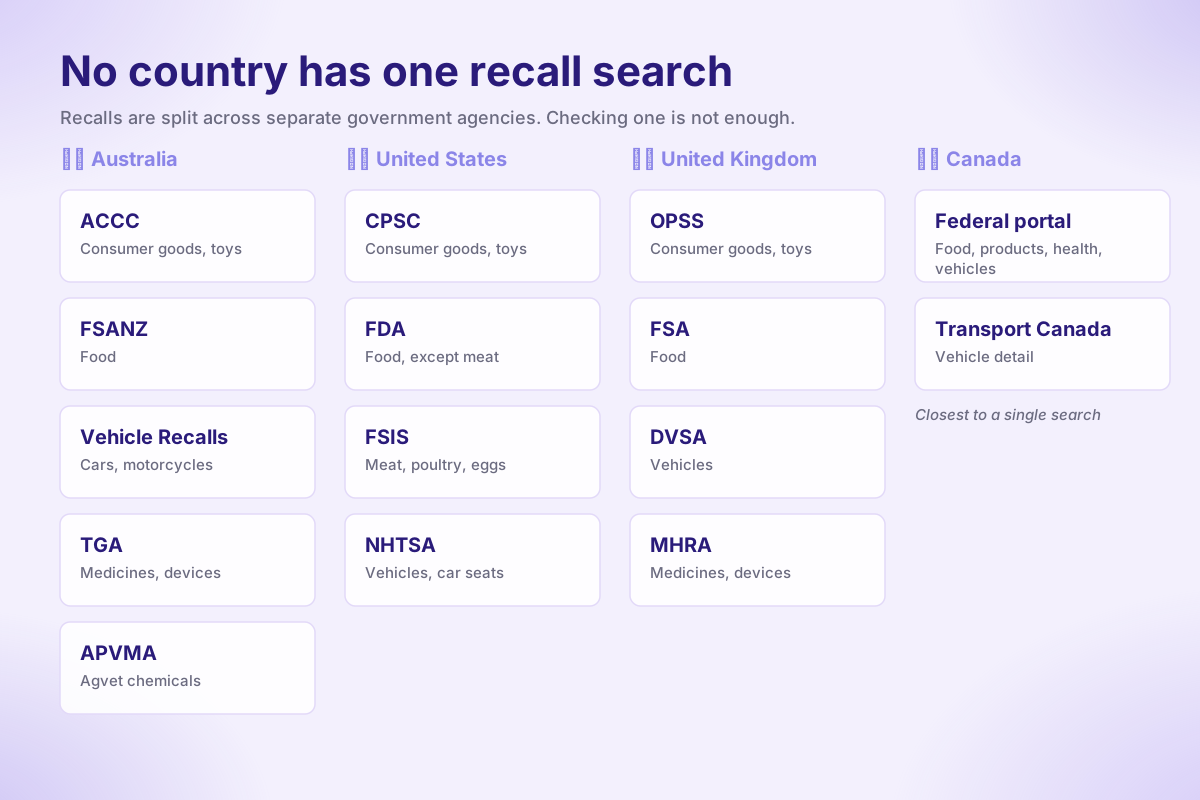
In the United States, stroller and baby gear recalls are usually listed by CPSC. CPSC also issues warnings when sellers do not cooperate with a recall.
In Canada, stroller, baby walker, toddler tower and baby product recalls appear on the Government of Canada recalls portal, often under Health Canada consumer product recalls. Canada also has specific rules around baby walkers.
In the UK, OPSS publishes product safety alerts, reports and recalls for childcare articles and children’s equipment, including car-seat adapters, highchairs, baby pillows, bassinets and similar products.
In Australia, parents should check Product Safety Australia / ACCC for baby and child product recalls and bans.
Parents often miss stroller and toddler product recalls because:
That is why RecallScope’s watchlist logic is useful. Parents can track:
The value is not browsing recall databases. The value is getting alerted when a product category or brand in your home has an official safety notice.
Use this today:
No. Recalls usually apply to specific models, accessories, dates, serial numbers or UPCs. Always compare the exact product.
Yes. The Joolz Aer2 recall affects the car-seat adapter set, not the full stroller.
No. Canada has banned baby walkers since 2004. Health Canada’s Vevor baby walker recall is a current reminder that online products can still appear even where the product category is banned.
Follow the official notice. Some notices say stop using immediately. Some allow continued use with conditions. Do not guess.
Yes. Second-hand baby products are exactly the kind of products where recalls are often missed.
Strollers, toddler towers and baby walkers are not products parents usually think to “monitor.” But current recalls show that these everyday baby products can create serious fall, tip-over, entrapment, choking or injury risks.
The safest habit is simple:
Check the exact model, serial number, UPC and accessory — not just the brand.
Then track the products and categories your family actually uses, so you do not have to rely on social media or random news stories to find the next alert.
Follow RecallScope for official-source recall explainers, safety tips and the most important updates. We auto-detect your country and timezone when possible.
RecallScope Team
9 min read
RecallScope Team
9 min read
RecallScope Team
6 min read
RecallScope Team
9 min read
RecallScope Team
8 min read
RecallScope Team
10 min read
RecallScope Team
9 min read
RecallScope Team
9 min read
RecallScope Team
6 min read
RecallScope Team
9 min read
RecallScope Team
8 min read
RecallScope Team
10 min read
